
Day 2 of the first-ever 73rd World Health Assembly (WHA)…
Over the past 2 days, we have seen the World Health Assembly, the highest decision-making body of the World Health Organization, take on a virtual format similar to many other organizations, conferences, and workplaces in the past few months due to the COVID19 pandemic.
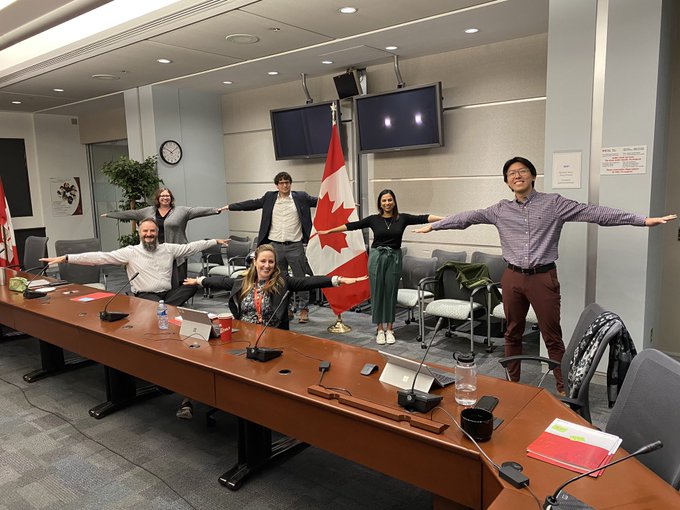
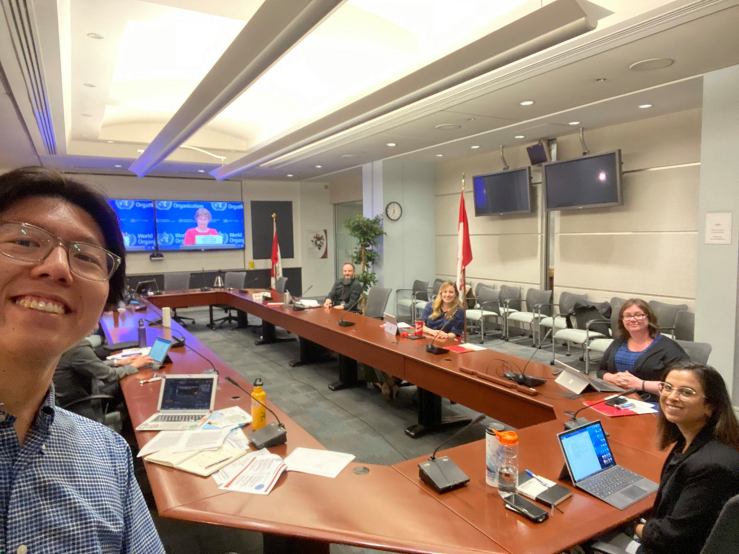
During the second day of the WHA, we saw continued interventions by various member states and other organizations, providing updates on their areas of work related to the pandemic and recommendations moving forward. Followed by the adoption of the draft resolution on the global COVID19 response, and the closing (or rather a suspension) of the WHA by high-level speeches and concluding remarks. With the WHA suspended, the plan is to reopen the WHA at a later date in 2020 depending on the state of the global response to the pandemic, to address and adopt any additional resolutions not passed by ‘written silence procedure‘ during a deferred agenda.
Through the many interventions (speeches) provided by member states and other organizations, many themes of ideas came through.
There were acknowledgements of thanking healthcare professionals, epidemiologists, and community members, condolences shared for those that lost loved ones, and recognizing nurses and midwives for their critical work during the pandemic as well as 2020 being designated as the year of the nurse and midwife. Many also commended and thanked Dr. Tedros and the WHO for their work during the response thus far. This included reaffirming their trust in the leadership and role of the WHO. However, there were also calls for evaluating and reviewing the response and role of WHO during this pandemic and future pandemics, and reevaluating the what sustainable financing for WHO ought to look like to ensure the technical organization lives up to the world’s expectations.
There were resoundingly clear calls and recommendations for a united, collaborative, global effort to tackle the COVID19 pandemic – to leave no one behind. With many sentiments from an equity lens to protect those most vulnerable from fragile health systems and systems for health. That until everyone is free from COVID19, the response is not over. Comments on how “We are as strong as our weakest health systems” and “When there is a threat to few, there is a threat to many” demonstrate an understanding of the interconnectedness and mutual dependency on each others’ successes in this response. Solidarity and unity.
Few also called for the need to strengthen, including reevaluating legal forces, the International Health Regulations (IHR). As well as to, strengthen global governance for public health and global universal health security.
Many shared their strategies and best practices in public health non-pharmaceutical interventions to mitigate and prevent the spread of COVID19 – including social/physical/routine distancing measures, use of face masks, testing for cases, and other creative approaches including digital and technological solutions. This also included acknowledging the collaborative work that occurred thus far in sharing viral genome information, supplies, technologies, and lessons learned. Looking towards the future, there were calls for vaccine and other essential medicines/technologies developed and in development for tackling COVID19, to be treated as global public goods and assets.
Some commented on their participation in the WHO global solidarity trials for possible treatments for COVID19 and promising anticipation of the outcomes of the act (access to COVID19 tools) accelerator, as a global collaboration to accelerate the development, production and equitable access to new COVID-19 diagnostics, therapeutics and vaccines.
The widespread impacts of the COVID19 pandemic have been felt by many around the world, some more directly and some more indirectly. This has encouraged man calls for action to invest in universal health care, primary care, health systems strengthening and resilient health systems, health and emergency preparedness, expand humanitarian assistance, and ensure strong public health infrastructure. This is also the time to ensure that mental health supports remain available and more readily accessible, restoring immunization programs for vaccine-preventable diseases, and ensure the healthcare provision of chronic and non-communicable diseases continue to avoid a secondary wave of non-COVID19 health issues.
The response to the pandemic must take a whole-of-society and health-in-all-policies approach, and was affirmed to ensure that it also takes into account the principle of equity, including a gender lens, and is evidence-based. The approach must also be grounded in reaffirming and respecting human rights, and maternal, sexual and reproductive rights. This includes tackling rumours and misinformation, stigma, and discrimination exacerbated by the COVID19 pandemic.
It was also resoundingly clear, that from tragedy and suffering, the COVID19 pandemic may be a critical turning point in human history. An opportunity to invest in humans and invest in health – reaffirm the right to health and life and dignity and the ‘right to hope’ – and to build a more resilient world. We must acknowledge that COVID19 is the common enemy of humankind and that vulnerable populations are suffering the most. Health cannot be bought or sold, but actions in how investments and policy decisions are made will have a critical impact on health and wellbeing.
There were also acknowledgements that this is an opportunity to tackle climate change, as these past few months have shown that non-pharmaceutical public health measures to tackle COVID19 have ‘allow[ed] the earth to breathe again’.
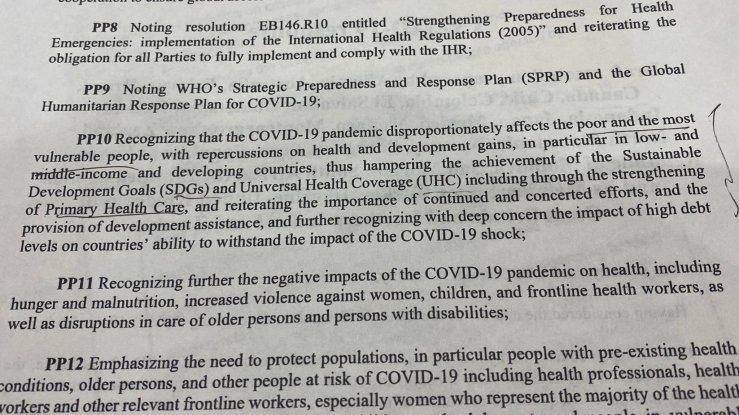
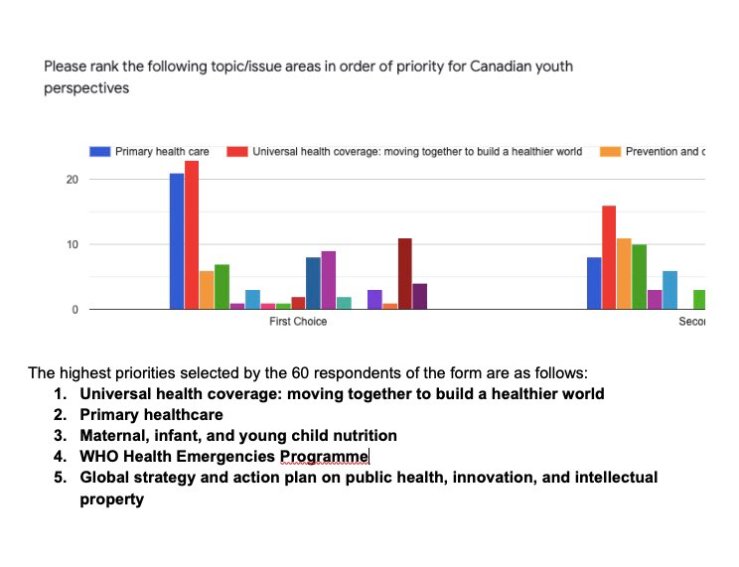
The adoption of the COVID19 response resolution at WHA, with 194 member states, is quite exceptional during these extraordinary times. An incredible amount of time and energy went into the negotiations process for this resolution, and I was very pleased to see many items discussed with Canadian youth during the consultations process, reflected in this resolution. Some highlights include the importance of universal health coverage and strengthening primary health care, the Sustainable Development Goals, protecting vulnerable populations, and equitable access to medications, vaccinations, technologies. The resolution also calls for the review of the global response to COVID19, including but not limited to the WHO.
The closure of WHA came with high-level addresses once again calling for global unity and collaboration. The collection of rights of reply at the end of @WHO #WHA73 reflect complex geopolitical tensions that are important to address, but cloud a sense of unity and collaboration during the #COVID19 pandemic response, especially in a technical organization convening space. During the final closing remarks, @DrTedros suspended the #WHA73 today until a later convening date in 2020, and shared that he was impressed and inspired of many countries in their #COVID19 responses, and the COVID-19 response resolution passed today that calls for an independent review of the global response including the WHO.
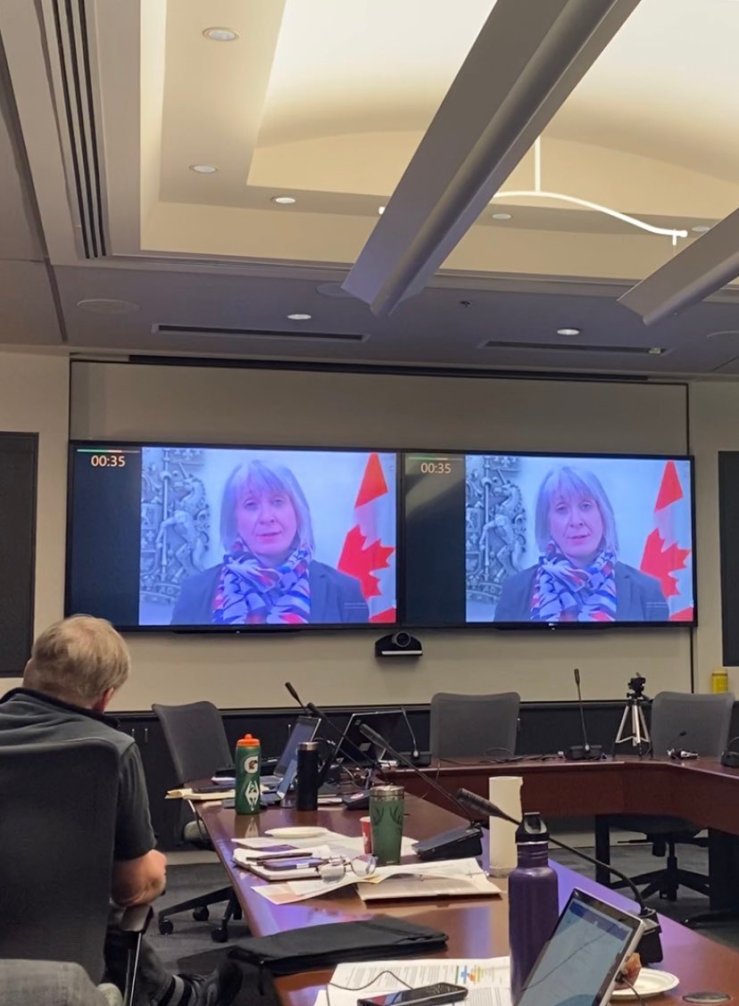
It’s been a great pleasure to experience the first-ever virtual World Health Assembly with the Canadian delegation, and to have learned so very much from colleagues at the Office of International Affairs for the Health Portfolio of the Public Health Agency of Canada. Most importantly, it has been a great privilege to learn from Canadian youth on perspectives on global public health issues during the COVID19 pandemic.
It’s quite an extraordinary year to be the Canadian youth delegate. With the WHA suspended until a later date in 2020, I look forward to continuing to serve in this role. I am also looking forward to beginning conversations as the Canadian youth delegate to the Pan American Health Organization (PAHO) Directing Council, to discuss public health issues in the context of the countries of the Americas to improve the health and quality of life of populations.
Until next time! Thank you for following this journey in lead up to the World Health Assembly, and I look forward to continuing the discussions!
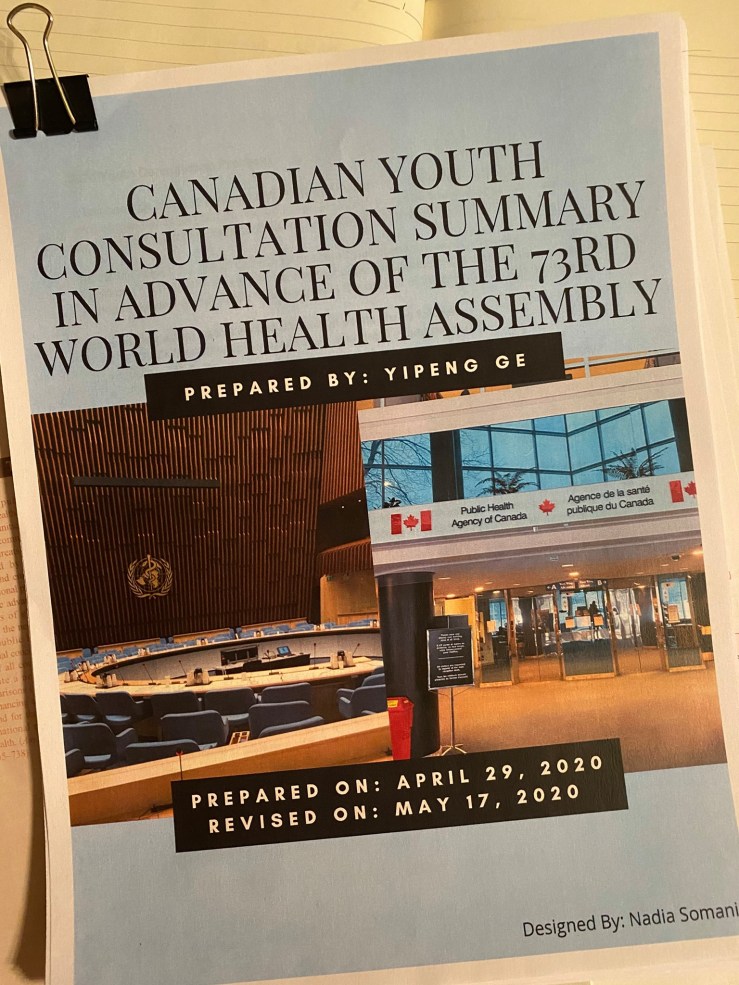
Full and final Canadian youth consultations summary document is available here: FINAL – 73rd Youth Consultations Summary Document
Instagram stories of day 1 and day 2 of the 73rd WHA!
-yipeng
 yipeng's global health journal