“I am because we are.”

I feel like I have been holding my breath for the past 2-3 months with many personal and professional uncertainties, some of which have been related to COVID-19 developments in China/Italy and elsewhere around the world, and now also includes Canada. The past week has been a turbulent one in Canada – with many changes in the messaging from public health leaders and our federal/provincial leaders. I felt quite anxious and unnerved yesterday evening, and a phone call with my mother in Waterloo, Ontario and a few back-and-forth text messages with my father in Shenzhen, China and my brother in Hamilton, Ontario reassured me.

There is still much that makes me anxious and nervous and I am telling myself that this is okay – I hope you also take care of yourself, physically, mentally, psychologically, and spiritually.

It has been an unprecedented time in public health, healthcare response, and public safety lately. In Canada, there have been tremendous updates and changes in the past week alone, including recent recommendations to not leave Canada and for Canadians abroad to return while they can with commercial airlines.

Mid-week, a pandemic was declared by the World Health Organization on COVID-19 and swiftly many measures and recommendations in Canada were implemented by public health experts and leaders to ā€˜flatten the curve’ – with the intention of lowering the impact of COVID-19 on our healthcare systems with limited resources so that healthcare professionals on the frontlines can provide acute and intensive care to those that need it the most.

Only a week ago, I had the privilege of discussing global public health issues and topics with youth, students, and young professionals through my capacity as Canada’s youth delegate to WHO. I have also greatly enjoyed reading insights and ideas from those that have completed my consultation and engagement form (https://forms.gle/6fMJhHMNkERQQ7Mk6).

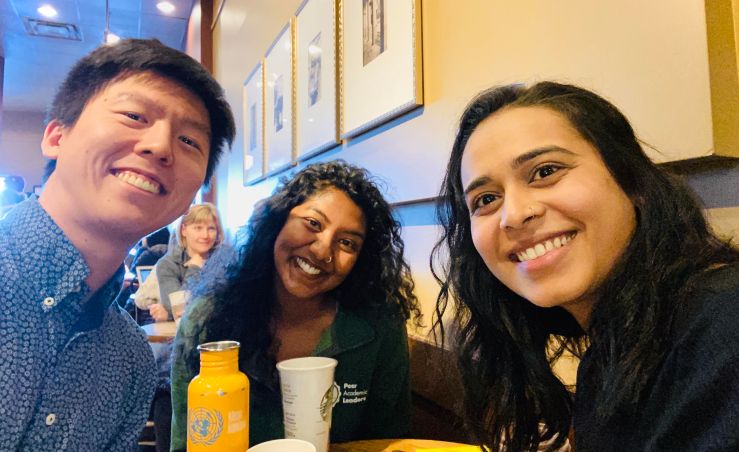
Last weekend I met with the Co-Presidents of the Canadian Coalition for Global Health Research University of Waterloo Student Chapter (Kruti Patel and Vinussa Rameshshanker). We had a truly engaging and interesting discussion about the environment and health, primary health care, and public health education and training our future generation of leaders. One of the most special things we discussed was our collective acknowledgement of the social impacts on health and wellbeing, and collective action and collaboration from across all sectors to put value where it matters most.Ā 

kruti and vinu - ccghr u waterloo

I think a great summary of what the discussion highlighted is the importance of ‘Ubuntu’ in the work and practice that we do and want to see in public health and global health. ‘Ubuntu’ is a Nguni Bantu (South African language) term meaning “humanityā€ and is often translated into “I am because we are,” or “humanity towards othersā€. (Thank you for sharing this with me, Vinussa!)

I think of why public health matters so much to me, is this value and understanding that we are global citizens that ought to take care of one another and our communities’ most vulnerable peoples. I also think of the issue of COVID-19 and how we must collectively work together in all facets and sectors – to protect our communities, to give our healthcare professionals a fighting chance, to share knowledge and learn from countries and communities that have dealt effectively with COVID-19. We have gotten through public health emergencies in the past – and we will get through this one as well, together with strong hearts and minds.

The news of a pandemic with COVID-19 came to me mid-day during a collaborative meeting at the Global Strategy Lab at York University (Thank you to Steven Hoffman for hosting us!), between two major global health organizations in Canada (Canadian Coalition for Global Health Research and Canadian Society for International Health) discussing the potential amalgamation of these two organizations to unify a community for the voice of Canadian global health leaders/practitioners/researchers/trainees.

Little did I realize when I started that day, that this meeting would be the last in-person larger group meeting that I would have for likely the next few weeks, if not months. The agenda was packed. There was much to take away. However, in brief, what I will share at this time, is that Canadian youth, students, and young professionals will certainly be playing a vital role in the potential amalgamation of Canada’s unified global health organization.
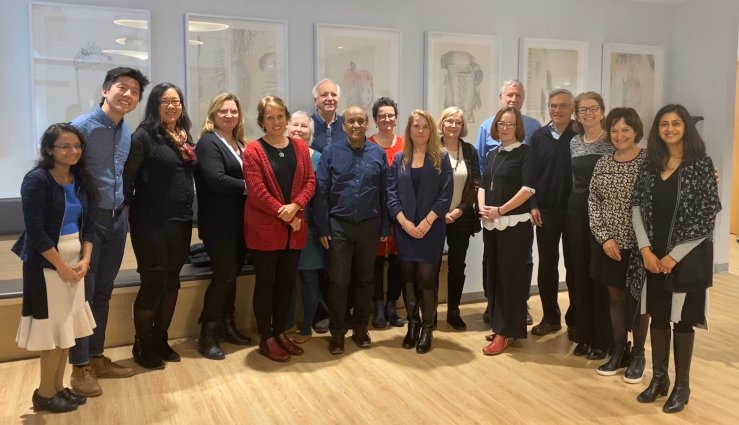
ccghr csih meeting march 11 2020

I have always had many mixed feelings and emotions discussing the idea of ‘global health’ and ‘health equity’ despite often citing these ideas as driving and motivating factors for why I do what I do, and what keeps me going. Another core take-away for me is a continued and sustained acknowledgement for equity centred and equity informed work and practice in global health – that we must recognize the role that power and privilege play in a field of practice that seeks to tackle the world’s most challenging disparities. Also including the absolute need to acknowledge our own intersectional identity, biases, values, and unique worldview that we bring to the table.

I think about the complex issue of COVID-19 and the societal response to it globally. I heard early on, two months ago, the feelings and thoughts and experiences of my family members in Wuhan, China and other parts of China. What I heard was a stark contrast to the reality I felt in Canada and I also feel guilty that a sense of visceral concern and anxiety in myself did not present itself until the outbreak reached Canadian soil. When it gets personal, people act. In a globalized world, everything should be personal.Ā I wondered how the global community did not react this way to climate change? Even though the impacts are severe.

I think this emphasizes more than ever – the importance not only of our public health and healthcare systems to protect and care for us, and in particular the most vulnerable populations in our communities but also noting that care should be based upon need. We must acknowledge our common humanity, that we are in this together as we are with many global issues, and that we are privileged to be in a country with a strong public health and healthcare response system.

I think of other countries and healthcare and public health systems that are less strong and one’s ability to survive and thrive may be different. This also presents as an example of what we can collectively accomplish together as a team – I am optimistic that this can set a precedent and example for what is possible (i.e. making meetings and healthcare more accessible with virtual technology, health promotion and good hygiene practices knowledge, political will to tackle the climate emergency, ensuring worker’s rights to a livable income and protections for time off work, and the list goes on…).

More than ever, I believe, that we need to practice compassion and empathy, that our intersectional identity is important to acknowledge and that issues like this can and will impact people in many different ways.Ā We are all connected, we ought to live as global citizens, and we must work together.

There also exists many important issues that feels like they have been trumped by the attention of COVID-19, and I believe we will get back to these issues, but only after we come together as communities and find our common humanity to get past this. The strategy and public health recommendation of ‘social distancing’ has been surely disruptive and inconvenient for so many. Personal sacrifices and inconveniences have been made by many, and you are entitled to your feelings and emotions. However, I also think it is a good time to practice gratitude and recognize where our privileges are, and also think of strategies as an ally to ensure that disruptions do not make vulnerable populations even more disadvantaged.

letter

I want to end this journal entry with this letter that my father shared with me this morning.

This is a letter addressed to my dad’s best friend and classmate (who took good care of my family and me when we vacationed in Italy last summer), who is Chinese but mostly lives and works in Italy. He is doing alright currently and staying home in his apartment in Italy. The letter is from an Italian neighbour in his building who he doesn’t actually know personally. It highlights the practice of gratitude in extraordinary times of difficulty, to assist one another as global citizens, to overcome an issue of global significance.

I am grateful for the citizens around the world that have self-isolated and are practicing social distancing. I am grateful for our public health experts and leaders working around the clock to provide recommendations and messaging to communities on how best to stay safe. I am grateful for journalists that are keeping us all updated and our leaders to account for their words and actions. I am grateful for health researchers that are working on biological solutions. I am grateful for frontline healthcare professionals that are caring for those that have gotten sick. I am grateful for business owners and workers that continue to make our food/water/medical supplies and other essential products available.

We need to recognize our common humanity, our mutual interdependence on each other’s wellbeing, and share stories of kindness – especially in these unprecedented times of a pandemic – but also, always and every day.Ā 

ā€œLet hope be the antidote to fear.
Let solidarity be the antidote to blame.
Let our shared humanity be the antidote to our shared threat.ā€
– Dr. Tedros Adhanom, the Director-General of the
World Health Organization

For Canadian updates on COVID-19: https://www.canada.ca/en/public-health/services/diseases/2019-novel-coronavirus-infection.html

-yipeng
“Tell me about yourself”

March 2, 2020 – As you may be aware, I have started to share a Canadian youth engagement process to help shape my recommendations and reporting back to the Office of International Affairs of the Health Portfolio (Public Health Agency of Canada) by learning more about global public health priorities of my fellow students, peers, and colleagues.

If you haven’t yet come across the survey form, please find it here: https://forms.gle/en6hxY91hWNEck1e8

I realize that as the form gets completed by Canadian youth (aged 18-30) across the country – thank you so much to those that have already completed the form! – I’m learning so very much about the professional backgrounds of many including your thoughts and ideas for a better and healthier world.

Upon reflection, I hope to share a bit more about myself, to help you better understand who will be representing you and your interests at upcoming global and international public health meetings for this year.

I want to share with you the perspectives that I brought into my initial application and intention to take this role on.

About myself: My name is Yipeng Ge (č‘›ä¹‰ęœ‹), a Chinese-Canadian, global citizen, first-generation immigrant, lifelong learner, health advocate, and a humble and grateful guest of this land. I was born in Wuhan, China, to hard-working parents that taught me the importance of family, culture, history, and language. I was educated on health and social inequities by Indigenous scholars and leaders in Hamilton and Six Nations communities. I am cognizant of the privilege that I grew up with and hold as a Canadian and am deeply interested in tackling health and social inequities, from a population health lens. I grew up in Waterloo, Ontario, Canada (situated on the Haldimand Tract, the traditional territory of the Neutral, Anishinaabeg and Haudenosaunee peoples), that allowed for free thought, exploration, and creativity during my childhood and adolescent years. I completed my undergraduate studies in Health Sciences and a specialization in Global Health in Hamilton, Ontario, Canada (traditional territory of the Haudenosaunee and Anishnaabeg peoples). I am currently in my 4th year of medical school in Ottawa, Ontario, Canada (the traditional, unceded, and unsurrendered territory of the Algonquin people).

Why I wanted to be a part of the Canadian Delegation to the World Health Assembly at the World Health Organization: I believe in the importance and value of sharing lessons, stories, and recommendations in a convening space like the World Health Assembly (WHA) at the World Health Organization (WHO), in advancing the health of communities around the world through strengthening healthcare systems and fundamentally investing in the broader ā€˜health system’, the systems in which we all grow, learn, play, and work in. I wanted to be a part of the Canadian delegation as the youth delegate, as the WHA provides an opportunity to recommit, re-evaluate, and reflect upon some of the challenges faced, the successes had, and existing gaps in social and health equities faced globally. Having previously worked at WHO, worked in global health convening spaces, and advocated for public health issues at the municipal, provincial, and federal levels in Canada, I hope to learn, represent youth, and engage in dialogue at the WHA to address health and wellbeing.

What skills I think I have in order to represent Canadian youth at the World Health Assembly: The World Health Assembly is an opportunity to acknowledge and plan to address some of the most pressing current and future complex global health issues. I have had the privilege of representing youth, students, and young professionals through a multitude of leadership experiences that I believe have strengthened my abilities and understandings to strive in this role. I have previously served on the board of directors for the Canadian Coalition for Global Health Research (CCGHR) as their student representative and the Canadian Federation of Medical Students (CFMS) as their Director of Government Affairs. Most recently, I was Co-Chair for the 25th annual Canadian Conference on Global Health, the first student or young professional in the role, and I successfully advocated for more meaningful youth engagement and representation by having a youth speaker on every plenary session, which was another first for the conference series. Through developing my leadership approach, as an approachable, compassionate, organized, and collaborative team member, I believe I have greatly strengthened my capabilities to represent Canadian youth at an international forum setting. I have learned to be very comfortable with my communication style, ability to build networks and connections, and approach to thinking critically about systems-level issues.

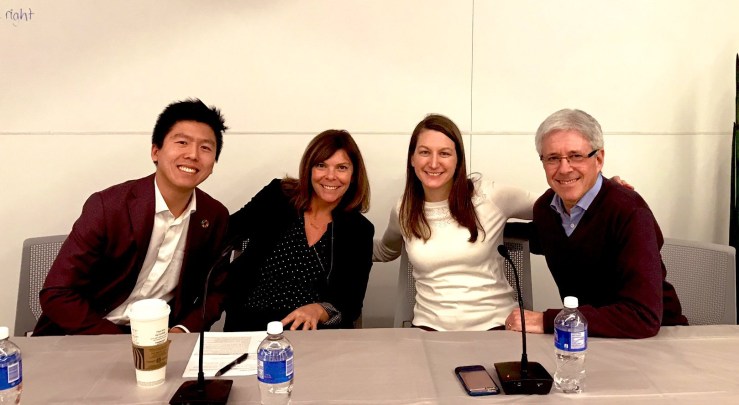
I recently had the privilege of speaking at an event hosted by University of Ottawa medical students on ā€œmedical politicsā€ engaging in discussion questions on the privatization of healthcare, healthcare access issues, equity in healthcare and training, the Canada Health Act, and climate change impacts on the healthcare system and human health. I told my fellow panellists and the audience, that I was quite intimidated and felt out of place (I always have a degree of imposter syndrome: a feeling of nervousness and anxiety that I’m where I am because of luck, fluke, and coincidence – that I’m not deserving and that there is someone better and more appropriate for the role/job or the space I occupy).

I initially signed up to attend the event as part of the audience, to hear the thoughts of three colleagues and leaders in healthcare and health advocacy work, three individuals that I deeply respect and wanted to hear their ideas and thoughts. To my surprise, I was invited to be a part of the panel to provide a ‘medical student perspective’. Finding myself on the other side of the event meant that I was challenged to introduce myself and speak on complex Canadian healthcare issues in an authentic and truthful way that aligned with my values and truths and teachings.

medical politics event uottawa

Hence, it is important for me to share these perspectives on where I am coming from. To better help us all understand where I may go with my consultation approach and what I may uniquely bring to the table, and the lens in which I see the world.

I believe the central driving factors that have led me to pursue the opportunities I choose to take on, are my interest and passion for working on issues and topics related to the social determinants of health and health equity. All of the factors that have a tremendously significant impact on one’s ability to live a healthy and fulfilling life – like income, housing, access to healthy food, education, and even things like colonial policy and the racism and discrimination that we can face in society –Ā  have an enormous impact on health and wellbeing and much of which is found outside clinics and hospitals. Thus, something I hope to balance is the individual-level impacts with the system-level impacts on health, as I learn how to provide compassionate clinical care with holistically understanding the root causes of illness, disease, and suffering.

I credit much of my health equity lens to the Indigenous scholars, clinicians, researchers, and community leaders that I had the privilege of learning from during an extended learning experience in global health – exploring Indigenous health in the context of Hamilton and Six Nations communities. We (Dr. Bernice Downey at McMaster University and four students including myself) recently successfully wrote up our experience in an article submitted to the International Journal of Students as Partners. I can’t wait to share the article with you when it’s published.

The experiences, discussions, and lessons that took place in the Hamilton and Six Nations communities and with our collaborators, deeply shaped my understanding of Indigenous peoples’ health and the critical importance of equity in the work that we all do. It was my first real exposure to knowledge that challenged my foundation of how I saw Canada and healthcare: learning about Canada’s dark history and ongoing mistreatment and violence against Indigenous peoples, the detrimental role that healthcare systems and physicians played (i.e. nutritional experiments on Indigenous children), and modern-day social and health disparities as a result of intergenerational trauma, residential schools, the Sixties Scoop, and many other reasons.

I was also introduced to the resilience, strength, and perseverance of peoples against all odds, and I was and I still am forever grateful for being welcomed into spaces to learn about history, language, culture, as an ally and guest of this land. I was terribly shocked, paralyzed, and distraught when I initially learned of residential schools, the Sixties Scoop, missing and murdered Indigenous women and girls, and many other areas of past and present issues of inequity – and I still am furious. However, I have been able to think critically in recent years about how to channel the fire and frustration I feel into passion and energy to fuel bettering myself as an ally to issues and topics that require collective action and advocacy.

Another formative set of experiences that have shaped my reality is my unique dynamic of a family unit. I previously mentioned that I was born in Wuhan, China. My parents met in Wuhan, having both attended university there. My father was and continues to be someone that works extremely hard to provide for others – he is the oldest of 5 children born to a family in rural Shandong, China. He grew up with poverty on a farm that predominantly produced garlic (the farm exists to this day with one of my uncles running it), at times not having enough money for new clothes, nutritious food and meats, and books and writing utensils for school.

He would often tell me and my younger brother stories of the sacrifices he made so that he could afford the materials to continue with schooling or to ensure that his younger siblings would eat well. That was his reality, and growing up with his stories, watching his actions reflect his values and lessons, it then became my reality to not ever take for granted the privilege I grew up with and hold because of factors I had no control over. The same way that he had no control over being born into poverty.

I was born in Wuhan, and many of my extended family members currently live there. The past few months have been fraught with mixed emotions due to the evolving public health issue of global importance and attention to Coronavirus and COVID-19. I continue to receive updates from family members and friends that have been directly and indirectly impacted by an evolving public health issue that has grappled popular media attention for so many weeks now.

I struggled with an interaction during my medical residency program interviews that I continue to think about to this day. Sometimes I feel I have the resilience to tolerate the most aggressive and insincere remarks, and sometimes I feel I can be sensitive to the smallest off-hand comment made in a light-hearted way. In short, the conversation during an interview with a staff and resident physician flowed to where I am from, and I felt it important at the time to acknowledge my birthplace of Wuhan. The immediate reaction was light-hearted quips and jokes about the entertaining possibility that I could have contracted the virus or disease (I was last in Wuhan back in April 2018 when my grandmother died after a short battle with metastatic lung cancer). I was stunned and confused – that physicians who looked after patients often at their most vulnerable and difficult times, could create a space that I could feel so uncomfortable in. With this said, physicians and doctors can and will also make mistakes in their words and actions.

The message I want to convey, I think, is the importance of being cognizant and aware of ones’ biases and how it might be reflected in ones’ language and actions perceived by others. I would hope that it goes without saying, to practice kindness and compassion, especially during particular moments of vulnerability, suffering, and difficulty.

-yipeng